
《养育女孩》是史蒂夫·比达尔夫的作品,当前资源标题记录的电子书格式为 PDF / ePub / mobi / azw3。这页先帮助读者确认书籍身份、内容主线和阅读预期,再核对实际文件状态。
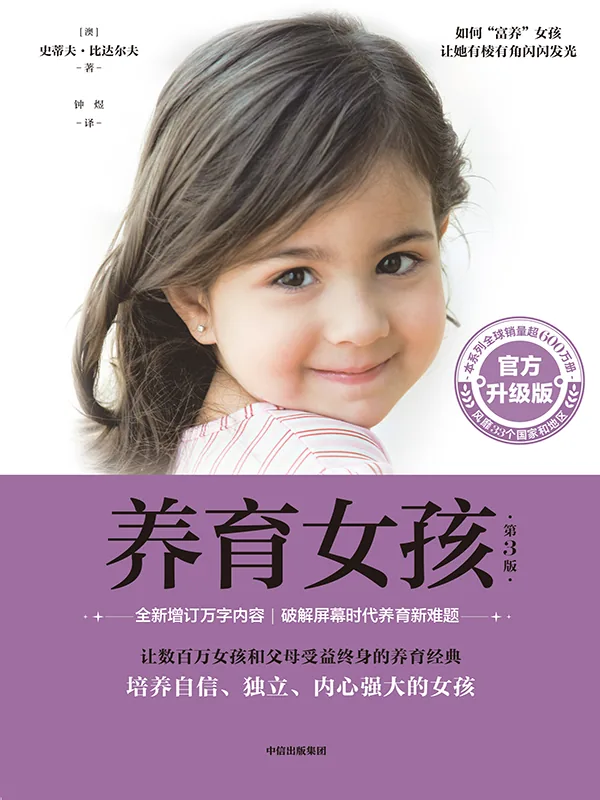
基本信息与出版版本
| 书名 | 养育女孩 |
|---|---|
| 作者 | 史蒂夫·比达尔夫 |
| 类别 | 亲子家教 / 心理学 / 个人成长 |
| 出版社 | 中信出版社 |
| ISBN | 9787521711837 |
| 电子书格式 | PDF / ePub / mobi / azw3 |
不同版本的出版社、译者、封面和排版可能存在差异;页数如果来源不足,本页不强行补写。实际电子书版本请以下载后的文件内容为准。
这本书主要讲什么
这不仅仅是一本育儿指南,更是一部对抗“有毒童年”的战斗手册。在商业社会编织的“粉红迷雾”中,我们的女孩正面临前所未有的危机:过早的性化、被社交媒体裹挟的容貌焦虑、以及日益脆弱的心理韧性。
中文书评
《养育女孩》最值得肯定的地方,是它没有把女孩成长中的困难简单归结为孩子不听话、性格敏感或者父母管教不够严格,而是把问题放到了家庭、学校、同伴关系和商业文化共同作用的环境中。史蒂夫·比达尔夫试图提醒父母:今天的女孩需要面对的挑战,已经不只是如何取得好成绩、学会独立生活,还包括怎样在容貌评价、性别刻板印象、社交媒体和同伴压力中建立稳定的自我认同。这本书真正关心的不是如何培养一个符合社会期待的乖女孩,而是如何帮助女孩成长为能够理解自己、保护自己,并有勇气表达真实想法的人。
史蒂夫·比达尔夫是一位长期关注儿童成长与家庭关系的心理学作家。《养育女孩》延续了他重视亲子情感连接、发展阶段和成长环境的写作思路。与一些侧重行为纠正和纪律训练的育儿书不同,他更强调女孩在不同年龄面临的心理需求,以及成年人如何提供可靠的支持。书中对当代商业文化的警惕尤其鲜明:从儿童商品中大量出现的粉红色包装,到广告和流行文化对女性外貌的持续强调,女孩很早就可能接触到关于美丽、受欢迎和女性价值的狭窄标准。
这种观察并不意味着粉红色、漂亮衣服或者爱美本身有什么问题。真正值得担忧的是,当女孩逐渐相信自己必须拥有某种身材、容貌和气质,才能获得认可时,她们的自我评价就容易受到外界左右。书中关于商业文化和过早性化的讨论,重要之处正在于揭示这种影响往往不是通过明确的命令发生的,而是渗透在玩具、服饰、娱乐内容和日常评价之中。一个女孩可能从未被父母直接要求减肥,却会因为频繁接触单一的审美标准而对身体产生不满;她可能没有遭遇明显的排斥,却会因为同伴之间的比较而越来越在意别人怎么看自己。
本书的核心主题,是帮助女孩建立不依赖外貌和外界认可的内在安全感。比达尔夫强调亲密关系的重要性,尤其重视父母和其他可信赖的成年人在女孩成长中的作用。女孩需要的并不只是保护,也不是永远有人替她解决问题,而是在遇到困难时,知道自己的感受能够被认真对待,自己的意见值得倾听。
在人物层面,《养育女孩》不是以单一主人公推动情节的小说,它关注的是成长过程中的几类真实角色。首先是正在建立自我认同的女孩。幼年时期,她可能通过模仿母亲、老师和身边的大孩子理解女性意味着什么;进入青春期后,身体变化、友谊关系和同伴评价可能逐渐成为生活中的重要议题。一个原本愿意表达意见的女孩,可能因为害怕被朋友嘲笑而选择沉默;一个过去喜欢运动的女孩,也可能因为越来越在意身体形象而不愿参加集体活动。这些具体而日常的矛盾,正是书中成长讨论最有现实意义的部分。
其次是母亲与父亲。母亲或其他女性照顾者的作用,不只是教女孩如何成为女性,更在于通过自己的生活态度展示如何尊重身体、面对压力和维护个人边界。如果母亲经常贬低自己的外貌,女儿就可能在无形中学习到类似的自我评价方式。父亲或其他男性照顾者同样重要。他们如何倾听女孩说话、如何对待女性、是否尊重孩子的独立意见,都会影响女孩对健康关系的理解。书中强调成年男性与女孩之间的积极情感连接,这一点具有启发性,但也应看到,稳定的照顾关系并不必然依赖某一种固定的家庭结构。
另一个不可忽视的角色是同龄伙伴。随着年龄增长,女孩对朋友的重视可能超过父母的预期。友谊能够带来归属感,也可能形成强烈的群体压力。例如,当几个朋友开始讨论体重、穿着和谁更受欢迎时,原本普通的聊天就可能逐渐变成相互比较。面对这样的变化,父母如果只是一味批评朋友不好,往往难以真正理解女孩的处境。比达尔夫对同伴关系的重视,提醒成年人应该帮助女孩发展判断能力,而不是试图替她安排所有社交关系。
《养育女孩》的一大优点,是能够把一些看似分散的成长问题联系起来。容貌焦虑、同伴压力、情绪波动和亲子沟通困难,往往并不是完全独立的事件。当女孩缺少稳定的情感支持,又长期受到外部评价影响时,这些问题可能相互强化。作者将心理成长与社会环境结合起来讨论,让父母意识到,真正有效的养育不只是告诉孩子应该怎么做,还包括调整家庭中的沟通方式,以及帮助她识别不合理的外界要求。 本书的语言也比较容易理解,没有把育儿问题完全写成专业心理学术语。它能够促使成年人重新审视一些习以为常的表达,例如随口评价女孩的胖瘦、过度称赞外貌,或者用乖巧和懂事作为衡量女孩表现的主要标准。很多时候,成年人以为这些话无伤大雅,却没有意识到它们可能不断强化女孩对外界认可的依赖。
不过,这本书也存在值得保留意见的地方。作者对现代商业文化和媒体环境的警惕有时比较强烈,容易让读者产生一种印象:女孩成长中出现的许多问题都可以归因于外部文化的负面影响。实际上,心理健康和人格发展受到多方面因素作用,包括个体气质、家庭经济条件、学校环境、社会支持和具体生活经历。社交媒体可能增加比较压力,也可能为一些女孩提供知识、兴趣社群和表达机会。因此,书中的风险提醒需要结合具体情境理解,而不宜直接转化为全面禁止或过度控制。
此外,以女孩为主要讨论对象的育儿写作,也难免面临性别概括过宽的问题。女孩之间的差异可能远大于成年人想象。有些女孩善于表达情绪,有些更加内敛;有些热爱艺术与社交,有些喜欢机械、竞技运动或独处。父母如果把书中的发展特点当成所有女孩都必须符合的标准,反而可能制造新的限制。比起判断女儿是否具有典型的女孩特征,更重要的是认识眼前这个孩子独特的兴趣、能力和情感需要。
《养育女孩》适合正在养育女儿的父母,也值得祖父母、教师和其他儿童照顾者阅读。对于家有学龄儿童或青春期女孩的家庭,书中关于身体形象、朋友关系、情绪支持和个人边界的讨论尤其值得关注。对于孩子尚处幼年阶段的父母,它也能够提供一种提前思考成长环境的角度。不过,读者不必把每一种风险都当成必然发生的危机,更不应该因为担忧而不断检查、干预孩子的日常选择。
总体而言,《养育女孩》是一部具有鲜明关怀立场和现实问题意识的亲子教育作品。它最重要的贡献,不在于提供一套能够保证女孩顺利成长的标准方法,而在于改变成年人观察女孩成长的角度:与其不断要求女孩变得更漂亮、更优秀、更听话,不如帮助她建立判断力、情绪韧性和自我尊重。一本好的育儿书未必能够解决所有家庭问题,但应该让父母学会提出更有价值的问题。《养育女孩》留下的核心问题正是:在一个不断告诉女孩应该成为什么样的人的社会里,我们能否给她足够的安全感与自由,让她逐渐发现自己真正想成为什么样的人?
English Review
Raising Girls by Steve Biddulph is most valuable for its refusal to treat the difficulties girls experience as merely individual behavioral problems. Instead of assuming that anxiety, insecurity, conflicts with friends, or concerns about appearance can be solved through stricter discipline, Biddulph examines the wider conditions in which girls grow up. Family relationships, social expectations, commercial advertising, peer pressure, and contemporary media all influence how girls understand themselves.
The central argument is that raising a healthy and confident girl requires more than teaching good manners or encouraging academic achievement. It requires adults to pay attention to the emotional and cultural environment surrounding her. Biddulph is known for his accessible writing about parenting, child development, and family relationships. In Raising Girls, he directs his attention toward the particular pressures that can affect girls from childhood through adolescence. One of his strongest concerns is the commercialization of girlhood.
Toys, clothing, advertising, entertainment, and popular culture frequently present narrow ideas about femininity, attractiveness, and social success. These messages may appear harmless individually, but their cumulative influence can shape a girl's understanding of what makes her valuable. The book's criticism of what might be called the commercialized pink world of childhood is especially thought-provoking. Biddulph is not simply arguing that girls should avoid traditionally feminine interests. Enjoying fashion, makeup, or pink clothing is not inherently harmful.
The problem emerges when these preferences become expectations and when girls begin to believe that appearance determines their worth. Consider a girl who enjoys sports but gradually becomes reluctant to participate because she worries about how her body looks. Another girl might feel pressured to change her clothing or interests because her friends have begun judging one another according to popularity and attractiveness. Neither situation necessarily involves direct bullying or explicit parental demands. Nevertheless, both illustrate how external judgments can gradually become internal restrictions.
This connection between social pressure and self-perception is one of the book's most important themes. Biddulph encourages parents to recognize that a girl's confidence depends not only on praise or achievement but also on a deeper sense of emotional security. A child needs to believe that she deserves respect regardless of whether she is attractive, popular, academically successful, or socially fashionable. Rather than presenting one fictional protagonist, Raising Girls examines several important figures in a girl's development.
The first is the girl herself, whose changing needs form the center of the discussion. A younger child may look to parents and teachers for guidance about acceptable behavior. As she grows older, friendships, physical development, personal identity, and independence can become increasingly important. The transition into adolescence is particularly significant because social belonging and self-expression may come into conflict. A girl may know that she disagrees with her friends but hesitate to speak because she fears exclusion. She may want greater independence while still needing reassurance from her family.
Biddulph's approach encourages adults to understand these situations as meaningful developmental challenges rather than dismissing them as ordinary teenage drama. Mothers and other female caregivers occupy an important place in the book's understanding of emotional development. Girls learn not only from explicit advice but also from observing how adults treat themselves. A mother who frequently criticizes her own weight or appearance may unintentionally communicate that women's bodies should always be evaluated and improved.
Conversely, a caregiver who demonstrates self-respect, emotional honesty, and healthy boundaries offers a different model of adulthood. Fathers and other male caregivers also matter. The way an adult man listens to a girl, responds to her feelings, and treats women can shape her expectations of respectful relationships. Biddulph's emphasis on supportive father-daughter connections is useful, although these benefits should not be interpreted as requiring one particular family structure. What matters most is the presence of dependable adults who treat children with consistency, affection, and respect.
Friends form another important group of characters in the book's broader developmental portrait. Friendship can provide girls with companionship, emotional support, and a sense of belonging. At the same time, peer relationships may introduce painful comparisons and pressures to conform. A seemingly ordinary conversation about clothing, weight, or social popularity can become a source of insecurity when acceptance depends on meeting particular expectations. Parents may be tempted to respond by criticizing certain friendships or imposing restrictions.
Yet such reactions can make girls less willing to discuss their experiences. Biddulph's broader emphasis on emotional connection suggests a more constructive approach: helping girls recognize unhealthy dynamics while respecting their growing ability to make decisions. One of the book's clearest strengths is its ability to connect problems that parents might otherwise view separately. Body dissatisfaction, emotional distress, friendship difficulties, and communication problems at home can influence one another.
By examining these relationships, Biddulph encourages readers to look beyond immediate behavior and consider the pressures that may be contributing to it. Another strength is accessibility. The book addresses psychological concerns without requiring readers to have professional training in child development. Its observations invite parents to reconsider ordinary habits, such as praising a daughter's appearance much more frequently than her curiosity, determination, or kindness. This practical attention to everyday communication makes its central message easier to apply.
However, the book is not without limitations. Its warnings about commercial culture and modern media can sometimes encourage an overly pessimistic interpretation of contemporary childhood. Digital environments certainly create opportunities for comparison, unrealistic beauty standards, and social pressure. Yet they can also give girls access to education, creative communities, supportive friendships, and opportunities for self-expression. An exclusively protective response may overlook these benefits. Preventing every uncomfortable experience is neither realistic nor necessarily desirable.
Children also need opportunities to practice judgment, manage disagreements, and recover from mistakes. A further limitation concerns generalizations about gender. Although girls can face distinctive cultural expectations, they do not share one uniform personality or developmental experience. Some girls enjoy traditional expressions of femininity, while others prefer activities that challenge conventional expectations. Some are socially confident, others are reserved, and many change significantly as they grow.
Parents should therefore treat the book's developmental observations as guidance rather than fixed rules. It is also important to recognize that emotional difficulties cannot always be explained by parenting choices or cultural pressures alone. Individual temperament, economic circumstances, educational experiences, neurological differences, and access to mental health support can all influence development. Families facing serious psychological difficulties may need specialized assistance beyond the general advice offered in a parenting book.
Raising Girls is particularly suitable for parents of daughters approaching adolescence, when questions of identity, friendship, physical appearance, and independence often become more visible. Parents of younger children can also benefit from its discussion of early social influences and emotional security. Teachers, grandparents, and other caregivers may find its insights useful when considering how their everyday words and expectations affect children. Its greatest value lies in encouraging adults to become more thoughtful rather than simply more controlling.
The goal is not to remove every source of risk from a girl's life. It is to help her develop the confidence, relationships, and critical judgment needed to respond to those risks. Ultimately, Raising Girls offers a persuasive reminder that successful parenting cannot be measured solely through obedience, grades, popularity, or outward confidence. A girl may appear accomplished while privately struggling with self-doubt, and she may challenge adult expectations while developing a healthy sense of independence.
Biddulph's most enduring contribution is his insistence that adults should take girls' emotional lives seriously. The book is strongest when it asks parents to listen more carefully, question restrictive social expectations, and provide dependable support without undermining independence. Readers should approach some of its cultural warnings and gender-based observations critically, but its central concern remains compelling. Raising a girl well does not mean shaping her into an idealized version of femininity.
It means helping her become a person who can recognize her own worth, establish healthy boundaries, build meaningful relationships, and make decisions according to her values rather than the demands of appearance or popularity. That is the lasting message that makes Raising Girls worth considering as both a parenting guide and a reflection on the conditions of modern childhood.
我的阅读笔记
从现有资料看,它最值得关注的是:这不仅仅是一本育儿指南,更是一部对抗“有毒童年”的战斗手册。读《养育女孩》时,可以先抓住作者史蒂夫·比达尔夫怎样设置背景、人物目标和主要冲突,再看这些部分如何导向主题。
第二个重点是在商业社会编织的“粉红迷雾”中,我们的女孩正面临前所未有的危机:过早的性化、被社交媒体裹挟的容貌焦虑、以及日益脆弱的心理韧性。如果它能继续推动人物选择、冲突升级和主题回响,这本书就更适合细读;如果只是信息并列,阅读价值会弱一些。
我觉得最值得看的地方
我觉得最值得看的地方,首先是它如何展开主题:这不仅仅是一本育儿指南,更是一部对抗“有毒童年”的战斗手册。其次是它是否能把问题讲清楚:在商业社会编织的“粉红迷雾”中,我们的女孩正面临前所未有的危机:过早的性化、被社交媒体裹挟的容貌焦虑、以及日益脆弱的心理韧性。这两点决定了它是只适合快速翻阅,还是值得花时间细读。
如果你关注亲子家教 / 心理学 / 个人成长,可以读完一章后用一句话写下这一章的观点,再决定是否继续精读。这样读完后留下的不是零散印象,而是对人物、冲突和主题的清楚判断。
与同类书有什么区别
读《养育女孩》之前,先判断它属于亲子家教 / 心理学 / 个人成长里的哪一种:是入门科普、方法书、教材,还是案例型读物。这个判断比只看格式更有用。
第一次读重点看什么
第一次读《养育女孩》,先看它在回答什么问题,再看作者怎么展开。可以先抓这两点:这不仅仅是一本育儿指南,更是一部对抗“有毒童年”的战斗手册;在商业社会编织的“粉红迷雾”中,我们的女孩正面临前所未有的危机:过早的性化、被社交媒体裹挟的容貌焦虑、以及日益脆弱的心理韧性。
- 这不仅仅是一本育儿指南,更是一部对抗“有毒童年”的战斗手册
- 在商业社会编织的“粉红迷雾”中,我们的女孩正面临前所未有的危机:过早的性化、被社交媒体裹挟的容貌焦虑、以及日益脆弱的心理韧性
哪些人适合读,哪些人可能不适合
如果你正在找《养育女孩》电子版,可以先确认 PDF / ePub / mobi / azw3 这些格式是否够用。想判断内容值不值得读,就看它在亲子家教 / 心理学 / 个人成长里解决的是哪类问题。
如果你需要的是完整纸质版校勘、特定译本差异或严格学术引用,请优先核对出版社、图书馆或 ISBN 书目系统;如果只是先找电子版阅读,则重点看格式、作者和版本字段是否符合自己的需求。
史蒂夫·比达尔夫和这本书的关系
史蒂夫·比达尔夫和《养育女孩》的关系,不只是“这本书的作者”这么简单。读这本书时,更值得看的是作者怎样处理亲子家教 / 心理学 / 个人成长方向里的核心问题,以及这些观点为什么会被整理成一本书。
如果你想评估这本书值不值得读,不要只看作者名气。更实用的办法是看作者提出的问题、使用的材料,以及这些内容能不能形成稳定的主题推进。
常见问题
《养育女孩》主要讲什么?
《养育女孩》主要围绕“这不仅仅是一本育儿指南,更是一部对抗“有毒童年”的战斗手册”展开。这个入口决定了作品的背景、冲突和主题方向。 另一条重要线索是:在商业社会编织的“粉红迷雾”中,我们的女孩正面临前所未有的危机:过早的性化、被社交媒体裹挟的容貌焦虑、以及日益脆弱的心理韧性。
《养育女孩》适合什么人读?
它适合愿意围绕《养育女孩》的主题、人物关系和结构推进慢慢读下去的读者。如果只想要非常轻快、直接、低门槛的阅读体验,可能不一定合适。
读《养育女孩》最该关注哪一点?
读《养育女孩》时,建议先看它提出了什么问题,再看作者史蒂夫·比达尔夫如何展开。真正决定阅读价值的,是人物选择、冲突发展和主题回响是否能互相支撑。
《养育女孩》电子书有哪些格式?
当前记录的格式为 PDF / ePub / mobi / azw3。实际可用文件、排版和版本信息,以页面底部资源模块和下载后的文件为准。
电子书格式与获取说明
当前页面记录《养育女孩》的电子书格式为 PDF / ePub / mobi / azw3。不同来源的电子书在排版、封面、译名和文件质量上可能会有差异,下载后请以实际文件信息为准。
