
《学会提问》是尼尔·布朗的作品,当前资源标题记录的电子书格式为 PDF / ePub / mobi / azw3。这页先帮助读者确认书籍身份、内容主线和阅读预期,再核对实际文件状态。
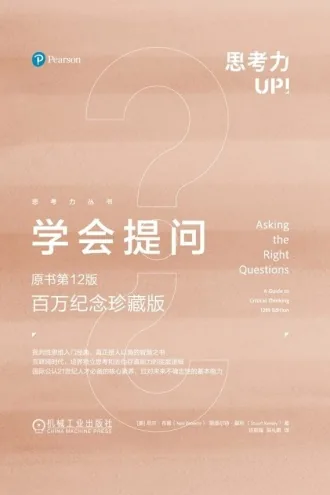
基本信息与出版版本
| 书名 | 学会提问 |
|---|---|
| 作者 | 尼尔·布朗 |
| 类别 | 思维方法 / 哲学 / 自我提升 |
| 出版社 | 机械工业出版社 |
| ISBN | 9787111680849 |
| 电子书格式 | PDF / ePub / mobi / azw3 |
不同版本的出版社、译者、封面和排版可能存在差异;页数如果来源不足,本页不强行补写。实际电子书版本请以下载后的文件内容为准。
这本书主要讲什么
《学会提问》(Asking the Right Questions: A Guide to Critical Thinking)是一本极具实操性的思维训练手册。尼尔·布朗和斯图尔特·基利在书中提供了一套完整的批判性思维框架。
中文书评
《学会提问》是一本真正把“思考”拆解成具体步骤的实用型作品。它没有试图教读者记住更多观点,而是训练读者面对任何观点时,先停下来问几个关键问题:这个结论是怎么来的?支持它的理由可靠吗?有没有隐藏的假设?这种阅读体验更像是在给自己的思维方式做一次系统检查。尼尔·布朗和斯图尔特·基利通过长期教学经验,将批判性思维整理成一套可以练习的方法框架,使这本书成为许多人进入独立思考领域的重要入门读物。
豆瓣读书 作品的背景来自现代社会中信息快速传播、观点大量碰撞的现实环境。作者关注的问题并不是某一个具体学科中的知识,而是人们如何判断一个说法是否值得接受。在新闻报道、商业宣传、课堂讨论甚至日常聊天中,人们经常会遇到带有结论的信息,但很多时候只看到结论,却忽略了结论背后的推理过程。《学会提问》正是针对这种思维习惯展开,它希望读者从单纯接收信息的状态,转向主动分析信息。书中提出的“海绵式思维”和“淘金式思维”的区别,就是为了说明吸收信息和筛选信息之间的差异。
豆瓣读书 本书最核心的主题是如何建立批判性思维习惯。作者并没有把批判理解为简单的反对,而是强调在接受一个观点之前,需要分析论题、结论、理由、证据以及隐藏的价值判断。例如,当有人提出“某种教育方式一定能提高孩子成绩”时,读者不应该马上接受或否定,而应该继续追问:这里的“提高成绩”具体指什么?依据是什么?有没有其他因素影响结果?研究样本是否具有代表性?作者通过这样的提问方式,让抽象的逻辑训练变成现实生活中可以使用的工具。
书中的“人物”并不是传统意义上的角色,而是作者设计出的不同思考场景中的观点提出者、调查者和判断者。比如,一个支持某项政策的人可能会强调政策带来的好处,但作者会引导读者进一步寻找其论证中的假设;一个引用数据的人可能看似客观,但读者需要判断数据来源、统计方式以及是否存在选择性呈现。通过这些具体情境,书中展示了现实中的争论并不只是观点之间的碰撞,更是推理质量之间的比较。
这本书最大的优点是结构清晰,而且非常强调实践。很多关于思维训练的作品容易停留在概念解释层面,而《学会提问》不断要求读者进行分析练习,让方法能够迁移到工作、学习和生活中。它对于习惯快速判断、容易受到情绪或权威影响的人尤其有帮助。读完之后,最大的变化通常不是变得更会辩论,而是在面对一个观点时,会自然产生进一步确认和分析的习惯。 当然,本书也存在一定不足。由于它采用的是训练手册式写法,部分章节会显得重复,需要读者耐心练习,而不是像普通读物一样快速浏览。另外,书中的案例主要服务于说明思维方法,对于希望看到大量现实社会案例或深入哲学讨论的读者来说,可能会觉得理论深度有限。它更像一本思维工具书,而不是系统哲学著作。
《学会提问》适合学生、职场人士、管理者,以及所有希望提升判断能力的人阅读。尤其是在信息来源越来越复杂的环境中,能够判断一个观点是否可靠,比单纯拥有更多信息更加重要。对于刚开始接触批判性思维的人来说,这本书提供了一条较为明确的训练路径;对于已经具备分析习惯的人来说,它也可以作为重新整理思考流程的参考。 总体来看,《学会提问》的价值不在于给出大量答案,而在于培养寻找答案之前应该提出什么问题的能力。它提醒读者,真正成熟的思考并不是拥有一个永远正确的观点,而是在面对不同观点时,能够保持开放、谨慎,并用可靠的理由支持自己的判断。这种能力不会因为时代变化而过时,也是这本书长期具有影响力的重要原因。
English Review
Asking the Right Questions: A Guide to Critical Thinking is a practical and structured book that focuses on one of the most important skills in modern life: learning how to think before accepting a conclusion. Rather than teaching readers a collection of opinions or theories, Neil Browne and Stuart M. Keeley provide a method for examining arguments, identifying assumptions, and evaluating evidence. The book has become a widely used introduction to critical thinking because it transforms an abstract intellectual skill into a process that can be practiced in everyday situations.
The background of the book comes from a common problem in contemporary society: people are constantly surrounded by information, advertisements, political claims, expert opinions, and social discussions, yet they are often not trained to evaluate the reasoning behind those messages. The authors are not mainly concerned with whether a particular conclusion is right or wrong. Instead, they focus on how people arrive at conclusions and whether the supporting reasons are strong enough. The central question of the book is simple but powerful: before believing a claim, what questions should we ask?
The main theme of the work is the development of critical thinking through a systematic questioning process. The authors explain that effective thinking requires more than collecting information. A person must identify the issue being discussed, find the conclusion being presented, examine the reasons offered, and discover the assumptions that connect evidence to conclusions.
For example, when someone argues that a new business strategy will guarantee higher profits, the critical thinker should ask what evidence supports this prediction, whether other factors have been considered, and whether the claim confuses possibility with certainty. Through examples like these, the book shows that questioning is not simply a way to challenge others; it is a way to understand ideas more accurately. The “characters” in the book are mainly people involved in different argument situations rather than fictional figures.
A researcher presenting a study, a public speaker promoting a policy, or a person defending a personal belief can all become examples of how reasoning works. The authors analyze these situations by showing where assumptions appear and how weak arguments can seem convincing when they are not carefully examined. This approach makes the book practical because readers can recognize similar patterns in conversations, workplace discussions, and media reports. One of the strongest aspects of the book is its clear framework.
Many books about thinking skills remain theoretical, but Asking the Right Questions repeatedly encourages readers to apply the method. Its greatest contribution is helping readers build a habit of slowing down before making judgments. Instead of immediately agreeing with an impressive statement or rejecting an uncomfortable opinion, readers learn to examine the structure behind the argument. This habit is valuable in education, professional decision-making, and personal communication. However, the book is not without limitations.
Its instructional style can feel repetitive because the authors intentionally reinforce the same questioning habits throughout the chapters. Readers looking for a philosophical exploration of human reasoning may find the approach somewhat practical and limited. The book is designed as a training guide, so it focuses more on usable techniques than on broader theoretical debates about knowledge, truth, or human cognition. This book is especially suitable for students, professionals, managers, and anyone who wants to improve judgment and decision-making skills.
It is particularly useful for people who often consume large amounts of information but struggle to determine which arguments deserve trust. Beginners in critical thinking will benefit most because the book offers a clear starting framework, while experienced readers can use it as a reminder to organize their analytical process. Overall, Asking the Right Questions is valuable because it teaches a skill that is often overlooked: the ability to ask better questions before forming conclusions. Its lasting importance comes from the fact that it does not promise simple answers to complicated problems.
Instead, it encourages readers to become more careful, curious, and independent thinkers. In a world where information is abundant but reliable judgment is difficult, the ability to question effectively remains one of the most useful intellectual abilities a person can develop.
我的阅读笔记
从现有资料看,它最值得关注的是:《学会提问》(Asking the Right Questions: A Guide to Critical Thinking)是一本极具实操性的思维训练手册。读《学会提问》时,可以先抓住作者尼尔·布朗怎样设置背景、人物目标和主要冲突,再看这些部分如何导向主题。
第二个重点是尼尔·布朗和斯图尔特·基利在书中提供了一套完整的批判性思维框架。如果它能继续推动人物选择、冲突升级和主题回响,这本书就更适合细读;如果只是信息并列,阅读价值会弱一些。
我觉得最值得看的地方
我觉得最值得看的地方,首先是它如何展开主题:《学会提问》(Asking the Right Questions: A Guide to Critical Thinking)是一本极具实操性的思维训练手册。其次是它是否能把问题讲清楚:尼尔·布朗和斯图尔特·基利在书中提供了一套完整的批判性思维框架。这两点决定了它是只适合快速翻阅,还是值得花时间细读。
如果你关注思维方法 / 哲学 / 自我提升,可以读完一章后用一句话写下这一章的观点,再决定是否继续精读。这样读完后留下的不是零散印象,而是对人物、冲突和主题的清楚判断。
与同类书有什么区别
读《学会提问》之前,先判断它属于思维方法 / 哲学 / 自我提升里的哪一种:是入门科普、方法书、教材,还是案例型读物。这个判断比只看格式更有用。
第一次读重点看什么
第一次读《学会提问》,先看它在回答什么问题,再看作者怎么展开。可以先抓这两点:《学会提问》(Asking the Right Questions: A Guide to Critical Thinking)是一本极具实操性的思维训练手册;尼尔·布朗和斯图尔特·基利在书中提供了一套完整的批判性思维框架。
- 《学会提问》(Asking the Right Questions: A Guide to Critical Thinking)是一本极具实操性的思维训练手册
- 尼尔·布朗和斯图尔特·基利在书中提供了一套完整的批判性思维框架
哪些人适合读,哪些人可能不适合
如果你正在找《学会提问》电子版,可以先确认 PDF / ePub / mobi / azw3 这些格式是否够用。想判断内容值不值得读,就看它在思维方法 / 哲学 / 自我提升里解决的是哪类问题。
如果你需要的是完整纸质版校勘、特定译本差异或严格学术引用,请优先核对出版社、图书馆或 ISBN 书目系统;如果只是先找电子版阅读,则重点看格式、作者和版本字段是否符合自己的需求。
尼尔·布朗和这本书的关系
尼尔·布朗和《学会提问》的关系,不只是“这本书的作者”这么简单。读这本书时,更值得看的是作者怎样处理思维方法 / 哲学 / 自我提升方向里的核心问题,以及这些观点为什么会被整理成一本书。
如果你想评估这本书值不值得读,不要只看作者名气。更实用的办法是看作者提出的问题、使用的材料,以及这些内容能不能形成稳定的主题推进。
常见问题
《学会提问》主要讲什么?
《学会提问》主要围绕“《学会提问》(Asking the Right Questions: A Guide to Critical Thinking)是一本极具实操性的思维训练手册”展开。这个入口决定了作品的背景、冲突和主题方向。 另一条重要线索是:尼尔·布朗和斯图尔特·基利在书中提供了一套完整的批判性思维框架。
《学会提问》适合什么人读?
它适合愿意围绕《学会提问》的主题、人物关系和结构推进慢慢读下去的读者。如果只想要非常轻快、直接、低门槛的阅读体验,可能不一定合适。
读《学会提问》最该关注哪一点?
读《学会提问》时,建议先看它提出了什么问题,再看作者尼尔·布朗如何展开。真正决定阅读价值的,是人物选择、冲突发展和主题回响是否能互相支撑。
《学会提问》电子书有哪些格式?
当前记录的格式为 PDF / ePub / mobi / azw3。实际可用文件、排版和版本信息,以页面底部资源模块和下载后的文件为准。
电子书格式与获取说明
当前页面记录《学会提问》的电子书格式为 PDF / ePub / mobi / azw3。不同来源的电子书在排版、封面、译名和文件质量上可能会有差异,下载后请以实际文件信息为准。
