
《艾略特波浪理论》是普莱切特的作品,当前资源标题记录的电子书格式为 PDF / ePub / mobi / azw3。这页先帮助读者确认书籍身份、内容主线和阅读预期,再核对实际文件状态。
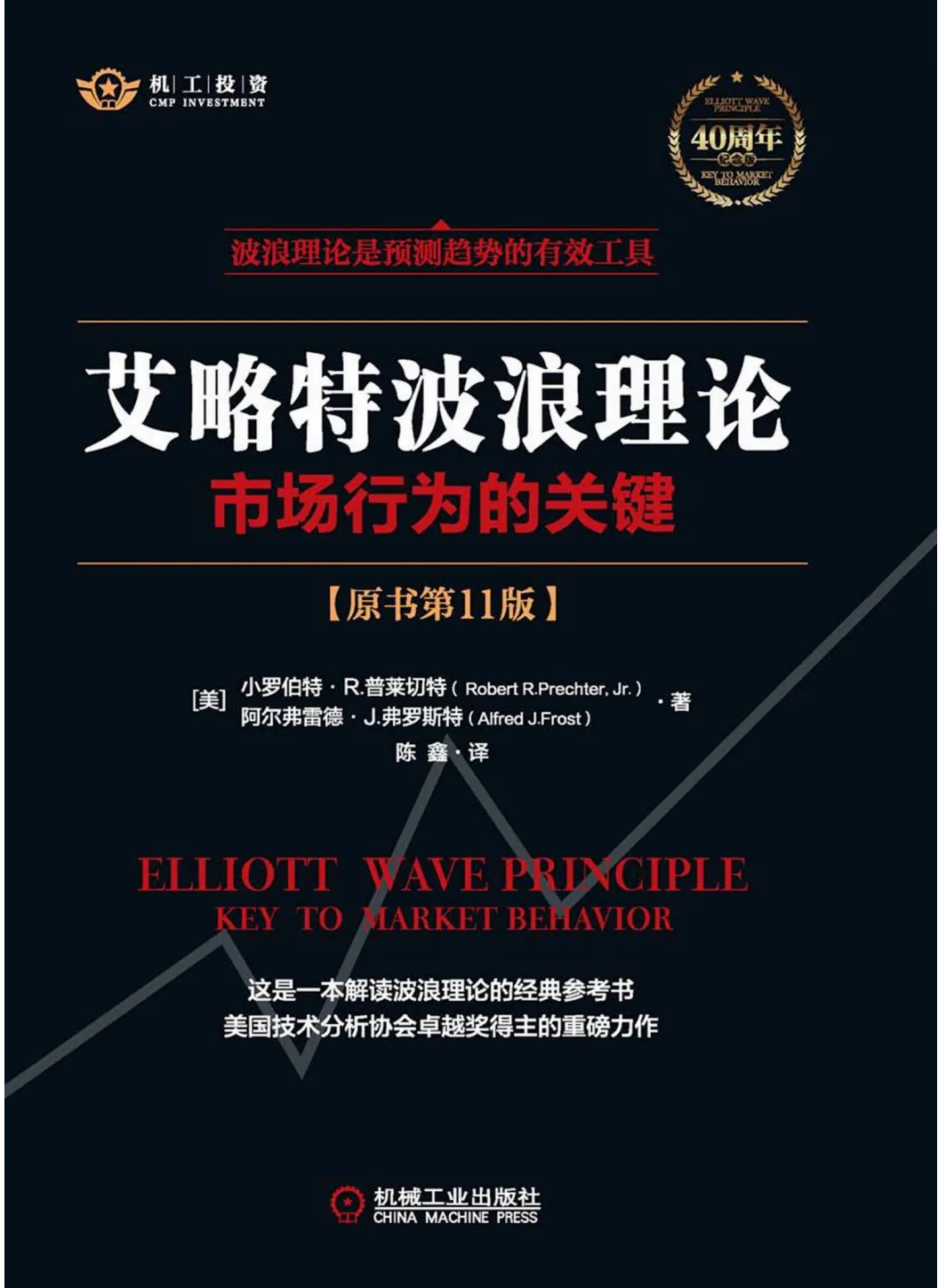
基本信息与出版版本
| 书名 | 艾略特波浪理论 |
|---|---|
| 作者 | 普莱切特 |
| 类别 | 证券投资 / 技术分析 / 周期理论 |
| 出版社 | 机械工业出版社 |
| ISBN | 9787111328001 |
| 电子书格式 | PDF / ePub / mobi / azw3 |
不同版本的出版社、译者、封面和排版可能存在差异;页数如果来源不足,本页不强行补写。实际电子书版本请以下载后的文件内容为准。
这本书主要讲什么
《艾略特波浪理论》基本信息 书名 艾略特波浪理论 (Elliott Wave Principle: Key to Market Behavior) 作者 小罗伯特·R. 普莱切特 (Robert R. Prechter Jr.) / A.J. 弗罗斯特 类别
中文书评
《艾略特波浪理论》是一部在技术分析领域具有代表性的经典作品,它的价值并不在于提供某一种简单的买卖公式,而是在于尝试解释市场价格变化背后的结构规律。普莱切特与弗罗斯特通过整理拉尔夫·纳尔逊·艾略特提出的波浪理论,将市场走势看作一种具有重复模式的行为过程,并系统介绍了五浪推动、三浪调整、浪级划分以及斐波纳奇比例等核心概念。该书长期以来被许多技术分析研究者作为理解艾略特理论的重要参考。
微信读书 作品的背景建立在20世纪金融市场技术研究的发展过程中。艾略特最初观察股票市场价格变化,认为市场参与者的集体心理会在价格走势中留下相对稳定的形态。普莱切特和弗罗斯特在此基础上进行整理和扩展,将这一套理论应用到股票、商品期货等市场分析场景中。书中并不是简单描述价格上涨或下跌,而是试图回答一个更深层的问题:为什么市场在人群情绪推动下,会不断出现类似的趋势、回调和反转结构。
微信读书 作品的核心主题,是通过“波浪”这一概念理解市场行为。作者提出,市场运动并非完全随机,而是在投资者乐观、恐惧、犹豫等情绪变化中形成一定规律。五浪结构中的推动浪代表趋势展开,调整浪则体现市场对前一阶段走势的修正。例如,一轮上涨行情中,第一浪往往来自少部分资金提前进入,第三浪通常伴随更广泛的市场认可,而第五浪可能出现情绪过度扩张。随后出现的调整阶段,则反映获利回吐和市场重新评估的过程。这样的分析方式,把价格图表从单纯的数字变化转化为市场心理变化的记录。
书中的主要“人物”并不是传统意义上的人物角色,而是围绕艾略特、普莱切特、弗罗斯特以及市场参与者展开。艾略特是理论提出者,他通过长期观察市场走势,寻找价格变化中的重复模式。普莱切特则承担了整理、推广和发展这一理论的重要角色,他强调波浪理论不仅是一套数浪方法,更是一种观察群体心理的方法。弗罗斯特作为共同作者,则帮助完善了理论表达,使复杂的技术体系能够被更多投资者理解。除此之外,书中真正贯穿始终的“角色”是市场中的投资者群体,他们的贪婪、恐惧和从众心理共同推动了价格波动。
这部作品最大的优点,是理论体系完整。相比许多只介绍指标用法的技术分析书籍,《艾略特波浪理论》提供了一套从长期趋势到短期波动的分析框架。书中对于不同浪级、浪形变化以及波浪之间关系的解释较为细致,使读者能够建立更加系统的市场观察方式。另外,作者大量结合走势图说明理论,不只是讲抽象概念,而是尝试让读者理解如何在真实市场环境中识别模式。
不过,这本书也存在明显不足。首先,波浪理论具有较强的主观判断特点,同一段市场走势,不同分析者可能得出不同的数浪结果。其次,市场受到经济政策、企业盈利、突发事件等多种因素影响,单纯依靠波浪结构并不能保证准确预测未来走势。对于刚接触技术分析的读者来说,书中的浪级、调整模式和复杂形态可能会造成较高学习门槛,需要结合实际走势图长期练习才能真正理解。 这本书更适合已经对股票市场、技术分析或投资心理感兴趣的读者。对于初学投资者,它可以帮助建立观察市场趋势的另一种视角,但不适合作为唯一的投资决策依据。对于有一定交易经验的人来说,书中的结构分析方法能够帮助他们重新思考趋势、周期和市场情绪之间的关系。
总体来看,《艾略特波浪理论》是一部影响深远但需要理性阅读的技术分析经典。它最大的贡献,是提供了一种理解市场行为的框架,让投资者看到价格背后的群体心理变化。它并不是预测市场的万能工具,但作为研究趋势结构和投资者情绪的重要理论作品,仍然具有较高的学习价值。
English Review
《Elliott Wave Principle: Key to Market Behavior》 is a classic work in the field of technical analysis, and its importance comes from presenting a structured way to study market movements rather than offering a simple trading formula. Written by Robert R. Prechter Jr. and. Frost, the book develops Ralph Nelson Elliott’s wave theory into a more organized analytical framework. It explains how price movements may form recurring patterns through concepts such as five-wave advances, three-wave corrections, wave degrees, and Fibonacci relationships.
The book has remained influential among technical analysts who study market cycles and investor psychology. The background of the book is closely connected with the development of market behavior research during the twentieth century. Ralph Nelson Elliott observed historical stock market movements and argued that collective human psychology could create recognizable patterns in financial prices. Prechter and Frost expanded this idea by organizing Elliott’s observations into a detailed system that could be applied to financial markets, including stocks and commodities.
Rather than viewing price changes as completely random events, the authors explore how repeated emotional reactions among investors can create recognizable stages of optimism, uncertainty, fear, and recovery. The central theme of the book is the relationship between market structure and human psychology. The authors explain that market trends often develop through a sequence of waves. In an upward movement, the first wave may represent early participation by a smaller group of investors. The third wave often reflects broader market acceptance as more participants join the trend.
The fifth wave may show strong public enthusiasm, sometimes reaching levels of excessive optimism. After this expansion, corrective waves appear as investors reassess prices and previous expectations. Through this framework, the book attempts to show that charts are not merely records of numbers but also reflections of collective behavior. The key figures behind the work are not fictional characters but the researchers and market thinkers who shaped the theory. Ralph Nelson Elliott is presented as the original observer who discovered repeating market patterns.
Robert Prechter plays a major role in organizing and promoting the theory, emphasizing that wave analysis is not only about counting price movements but also about understanding social mood.. Frost contributes by helping present the theory in a clearer and more practical form. The most important “character” throughout the book, however, is the market participant itself: the investor whose decisions are influenced by fear, greed, confidence, and crowd behavior. One of the strongest aspects of the book is its comprehensive theoretical structure.
Unlike many technical analysis books that focus mainly on individual indicators, this work provides a broader framework for understanding trends across different time scales. The explanations of wave patterns, market cycles, and structural relationships give readers a systematic method for examining charts. The use of historical examples and detailed illustrations also makes the theory more concrete and easier to connect with actual market situations. However, the book also has limitations. The most significant challenge is that wave interpretation can involve considerable subjectivity.
Different analysts may examine the same price movement and reach different conclusions about where a wave begins or ends. In addition, financial markets are affected by many external factors, including economic conditions, company performance, government policies, and unexpected events. Wave analysis alone cannot provide guaranteed predictions. New readers may also find the terminology and complex wave structures difficult without previous experience in market analysis. This book is most suitable for readers who already have an interest in financial markets, technical analysis, or investor psychology.
Beginners can gain a new perspective on market cycles, but they should not treat the theory as a complete investment system. More experienced investors may find value in its discussion of trends, patterns, and emotional cycles because it encourages a deeper understanding of why markets behave differently during periods of optimism and fear. Overall, 《Elliott Wave Principle》 remains an important and thought-provoking work in technical analysis. Its greatest contribution is not the promise of perfect forecasting, but the attempt to explain market behavior through recurring structures and collective psychology.
While the theory requires careful interpretation and should be used alongside other forms of analysis, the book continues to provide a valuable perspective for anyone interested in studying how human emotions influence financial markets.
我的阅读笔记
从现有资料看,它最值得关注的是:《艾略特波浪理论》基本信息 书名 艾略特波浪理论 (Elliott Wave Principle: Key to Market Behavior) 作者 小罗伯特·R. 普莱切特 (Robert R. Prechter Jr.) / A.J. 弗罗斯特 类别。读《艾略特波浪理论》时,可以先抓住作者普莱切特怎样设置背景、人物目标和主要冲突,再看这些部分如何导向主题。
第二个重点是目录、前言和章节安排。如果它能继续推动人物选择、冲突升级和主题回响,这本书就更适合细读;如果只是信息并列,阅读价值会弱一些。
我觉得最值得看的地方
我觉得最值得看的地方,是它围绕“《艾略特波浪理论》基本信息 书名 艾略特波浪理论 (Elliott Wave Principle: Key to Market Behavior) 作者 小罗伯特·R. 普莱切特 (Robert R. Prechter Jr.) / A.J. 弗罗斯特 类别”展开的部分。这一点能帮助读者进入作品真正的矛盾,而不是只停在题材表面。
如果你关注证券投资 / 技术分析 / 周期理论,可以读完一章后用一句话写下这一章的观点,再决定是否继续精读。这样读完后留下的不是零散印象,而是对人物、冲突和主题的清楚判断。
与同类书有什么区别
读《艾略特波浪理论》之前,先判断它属于证券投资 / 技术分析 / 周期理论里的哪一种:是入门科普、方法书、教材,还是案例型读物。这个判断比只看格式更有用。
第一次读重点看什么
第一次读《艾略特波浪理论》,先看它在回答什么问题,再看作者怎么展开。可以先抓这两点:《艾略特波浪理论》基本信息 书名 艾略特波浪理论 (Elliott Wave Principle: Key to Market Behavior) 作者 小罗伯特·R. 普莱切特 (Robert R. Prechter Jr.) / A.J. 弗罗斯特 类别;再结合目录判断自己要不要细读。
- 《艾略特波浪理论》基本信息 书名 艾略特波浪理论 (Elliott Wave Principle: Key to Market Behavior) 作者 小罗伯特·R. 普莱切特 (Robert R. Prechter Jr.) / A.J. 弗罗斯特 类别
哪些人适合读,哪些人可能不适合
如果你正在找《艾略特波浪理论》电子版,可以先确认 PDF / ePub / mobi / azw3 这些格式是否够用。想判断内容值不值得读,就看它在证券投资 / 技术分析 / 周期理论里解决的是哪类问题。
如果你需要的是完整纸质版校勘、特定译本差异或严格学术引用,请优先核对出版社、图书馆或 ISBN 书目系统;如果只是先找电子版阅读,则重点看格式、作者和版本字段是否符合自己的需求。
普莱切特和这本书的关系
普莱切特和《艾略特波浪理论》的关系,不只是“这本书的作者”这么简单。读这本书时,更值得看的是作者怎样处理证券投资 / 技术分析 / 周期理论方向里的核心问题,以及这些观点为什么会被整理成一本书。
如果你想评估这本书值不值得读,不要只看作者名气。更实用的办法是看作者提出的问题、使用的材料,以及这些内容能不能形成稳定的主题推进。
常见问题
《艾略特波浪理论》主要讲什么?
《艾略特波浪理论》主要围绕“《艾略特波浪理论》基本信息 书名 艾略特波浪理论 (Elliott Wave Principle: Key to Market Behavior) 作者 小罗伯特·R. 普莱切特 (Robert R. Prechter Jr.) / A.J. 弗罗斯特 类别”展开。这个入口决定了作品的背景、冲突和主题方向。
《艾略特波浪理论》适合什么人读?
它适合愿意围绕《艾略特波浪理论》的主题、人物关系和结构推进慢慢读下去的读者。如果只想要非常轻快、直接、低门槛的阅读体验,可能不一定合适。
读《艾略特波浪理论》最该关注哪一点?
读《艾略特波浪理论》时,建议先看它提出了什么问题,再看作者普莱切特如何展开。真正决定阅读价值的,是人物选择、冲突发展和主题回响是否能互相支撑。
《艾略特波浪理论》电子书有哪些格式?
当前记录的格式为 PDF / ePub / mobi / azw3。实际可用文件、排版和版本信息,以页面底部资源模块和下载后的文件为准。
电子书格式与获取说明
当前页面记录《艾略特波浪理论》的电子书格式为 PDF / ePub / mobi / azw3。不同来源的电子书在排版、封面、译名和文件质量上可能会有差异,下载后请以实际文件信息为准。
