
《价值投资3.0》是亚当·西塞尔的作品,当前资源标题记录的电子书格式为 PDF / ePub / mobi / azw3。这页先帮助读者确认书籍身份、内容主线和阅读预期,再核对实际文件状态。
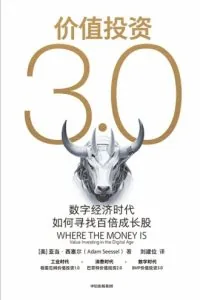
基本信息与出版版本
| 书名 | 价值投资3.0 |
|---|---|
| 作者 | 亚当·西塞尔 |
| 类别 | 金融 / 价值投资 / 科技股分析 |
| 出版社 | 中信出版集团 |
| ISBN | 9787521754247 |
| 电子书格式 | PDF / ePub / mobi / azw3 |
不同版本的出版社、译者、封面和排版可能存在差异;页数如果来源不足,本页不强行补写。实际电子书版本请以下载后的文件内容为准。
这本书主要讲什么
《价值投资3.0:数字经济时代如何寻找百倍成长股》(Where the Money Is: Value Investing in the Digital Age)是一本试图拯救“过时”价值投资者的实战指南。
中文书评
《价值投资3.0》是一部试图回答一个现实问题的投资著作:当经济核心从传统制造、消费品牌逐渐转向数字平台和科技企业时,过去熟悉的价值投资方法是否仍然有效?亚当·西塞尔没有简单否定格雷厄姆和巴菲特的理念,而是尝试说明价值投资如何随着商业环境变化而继续演进。本书中文版由中信出版集团出版,原名《Where the Money Is: Value Investing in the Digital Age》,围绕数字经济时代如何寻找高质量成长企业展开讨论。
作品的背景建立在一个明显变化的市场环境中。过去的价值投资更多关注资产价格是否低于内在价值,例如格雷厄姆时代重视便宜的股票和安全边际,而巴菲特进一步发展出关注企业护城河、品牌优势和长期竞争力的方法。西塞尔认为,进入数字时代后,许多优秀企业的价值不再主要体现在厂房、库存或传统资产上,而体现在用户规模、网络效应、技术能力、数据积累以及商业模式扩张能力上。作者试图解决的正是传统价值投资者面对科技企业时产生的不适感:这些公司看起来估值很高,但它们可能拥有持续创造价值的能力。
豆瓣阅读 全书最核心的主题,是提出适应数字经济环境的价值投资框架。西塞尔提出BMP分析方法,即从业务质量(Business)、管理质量(Management)和价格估值(Price)三个角度判断企业价值。这个方法并不是单纯寻找低市盈率股票,而是要求投资者理解企业为什么能够长期赚钱,以及市场价格是否合理。书中对于数字科技企业的分析尤其值得注意,因为作者并没有把科技公司简单等同于成长股,而是试图用价值投资的逻辑重新审视它们。
人物分析方面,本书最大的主角其实是作者亚当·西塞尔本人。他并不是单纯站在理论角度讨论投资,而是结合自己多年华尔街研究经历展开论述。西塞尔曾从事证券研究和资产管理工作,也长期研究格雷厄姆、多德以及巴菲特的投资思想。他在书中呈现出的形象,是一个传统价值投资体系的继承者,同时也是一个愿意面对新商业模式变化的实践者。 书中另一个重要人物线索是本杰明·格雷厄姆和沃伦·巴菲特。作者通过两人的投资思想变化,构建了价值投资从1.0到2.0再到3.0的发展路径:从寻找便宜资产,到寻找优秀企业,再到数字时代寻找具有长期竞争优势的数字企业。
这本书的优点在于,它没有停留在“科技股很有潜力”这种简单判断,而是尝试提供具体分析方法。对于很多投资者来说,面对苹果、亚马逊、微软等数字经济代表企业时,最大的困难不是发现它们优秀,而是不知道如何判断价格是否合理。本书提供了一套较完整的思考方式,让读者重新理解竞争优势、盈利能力和企业成长之间的关系。同时,作者对于投资流程的强调也比较有价值。他反复提醒投资者,不要因为市场热点改变自己的判断标准,而应该建立自己能够理解和执行的方法。
不过,本书也存在一定局限。首先,“价值投资3.0”这一概念本身带有较强的作者个人判断色彩,读者需要认识到,它并不是价值投资唯一的发展方向。其次,数字企业的发展速度很快,竞争格局变化明显,过去有效的商业模式未必能长期保持优势。书中的部分案例和分析更多体现作者在特定时期的投资经验,并不能直接套用到所有市场环境中。另外,对于刚接触投资的人来说,书中的企业分析框架和估值讨论仍然需要一定财务基础,否则阅读过程中可能会感到偏专业。 这本书更适合已经接触过价值投资、希望理解科技企业分析方法的投资者,也适合关注商业趋势和企业竞争力的管理者、创业者阅读。对于完全没有投资基础的读者,它可能不是最轻松的入门读物,但可以作为建立长期投资思维的一本进阶书。
总体来看,《价值投资3.0》并不是一本预测某些股票未来上涨的投资秘籍,而是一场关于投资理念如何适应时代变化的讨论。它最大的价值,在于提醒投资者:真正的价值判断并不会因为行业变化而失效,但判断价值的方法必须不断更新。在数字经济成为重要力量的今天,理解企业为什么优秀,比单纯寻找便宜价格更加重要。
English Review
Value Investing 3.0 is a thoughtful attempt to answer a difficult question in modern investing: can traditional value investing still work in an economy increasingly dominated by digital platforms, software companies, and technology-driven businesses? Adam Seessel does not reject the ideas of Benjamin Graham or Warren Buffett. Instead, he argues that value investing must evolve as the nature of business itself changes. Originally published as Where the Money Is: Value Investing in the Digital Age, the book examines how investors can identify high-quality companies in the digital economy.
The background of the book comes from a major transformation in global markets. Classical value investing developed around finding undervalued assets and purchasing stocks with a margin of safety. Benjamin Graham focused on buying companies at prices below their intrinsic value, while Warren Buffett expanded the approach by emphasizing durable competitive advantages, strong management, and exceptional businesses. Seessel argues that the digital era requires investors to recognize a different type of value. Many modern technology companies do not build their advantages through factories or physical assets.
Their strengths often come from network effects, software ecosystems, customer relationships, data advantages, and scalable business models. The central theme of the book is the idea that value investing has entered a new stage. Seessel introduces the BMP framework, which evaluates companies through three dimensions: Business quality, Management quality, and Price. The framework encourages investors to look beyond traditional valuation metrics and ask deeper questions. Is the company’s business model becoming stronger over time? Does management allocate capital effectively?
Is the stock price reasonable compared with the company’s future potential? The book’s argument is that technology companies should not automatically be treated as speculative growth stories; they should be analyzed as businesses with measurable competitive advantages. The most important figure in the book is Adam Seessel himself. His perspective comes from years of experience in investment research and asset management. Rather than presenting an entirely new investment philosophy, he positions himself as a continuation of the Graham-Buffett tradition.
His personal conflict throughout the book is clear: how can a disciplined value investor remain faithful to proven principles while adapting to companies that look expensive by traditional standards? This tension gives the book much of its practical appeal. Another important group of figures consists of Benjamin Graham and Warren Buffett. Seessel uses their approaches as historical foundations for his argument. Graham represents the first stage of value investing, focused on cheap assets and financial protection.
Buffett represents the second stage, where investors seek excellent businesses with lasting advantages. Seessel’s proposed third stage focuses on identifying digital companies that combine strong competitive positions with reasonable valuations. One of the book’s greatest strengths is its attempt to provide a practical framework instead of simply praising technology companies. Many investors understand that companies such as major software platforms or digital businesses are powerful, but they struggle to determine whether those businesses are worth owning at current prices.
Seessel provides a structured way to think about business quality, management decisions, profitability, and valuation. His emphasis on understanding a company before investing is also valuable, especially in periods when market enthusiasm can easily replace careful analysis. However, the book has limitations. The concept of “Value Investing 3.0” is ultimately Seessel’s interpretation of how investing should evolve, rather than a universally accepted new model. Digital businesses can change rapidly, and competitive advantages that appear permanent may weaken as technology and consumer behavior shift.
Some examples and conclusions are closely connected to specific market conditions, so readers should avoid applying the framework mechanically. In addition, beginners without basic financial knowledge may find some discussions of valuation and business analysis challenging. This book is best suited for investors who already understand basic value investing concepts and want to explore how those ideas apply to technology companies. It is also useful for entrepreneurs, business professionals, and readers interested in understanding why certain companies achieve long-term success.
For complete beginners, it may work better as a second investment book rather than a first introduction. Overall, Value Investing 3.0 is not a shortcut for finding guaranteed winning stocks. Its real contribution is the discussion of how investors should rethink value in a changing economy. Seessel’s message is that the principles of investing remain important, but the way investors identify valuable businesses must evolve. In a digital economy, understanding why a company can continue creating value may matter more than simply finding a low stock price.
我的阅读笔记
从现有资料看,它最值得关注的是:《价值投资3.0:数字经济时代如何寻找百倍成长股》(Where the Money Is: Value Investing in the Digital Age)是一本试图拯救“过时”价值投资者的实战指南。读《价值投资3.0》时,可以先抓住作者亚当·西塞尔怎样设置背景、人物目标和主要冲突,再看这些部分如何导向主题。
第二个重点是目录、前言和章节安排。如果它能继续推动人物选择、冲突升级和主题回响,这本书就更适合细读;如果只是信息并列,阅读价值会弱一些。
我觉得最值得看的地方
我觉得最值得看的地方,是它围绕“《价值投资3.0:数字经济时代如何寻找百倍成长股》(Where the Money Is: Value Investing in the Digital Age)是一本试图拯救“过时”价值投资者的实战指南”展开的部分。这一点能帮助读者进入作品真正的矛盾,而不是只停在题材表面。
如果你关注金融 / 价值投资 / 科技股分析,可以读完一章后用一句话写下这一章的观点,再决定是否继续精读。这样读完后留下的不是零散印象,而是对人物、冲突和主题的清楚判断。
与同类书有什么区别
读《价值投资3.0》之前,先判断它属于金融 / 价值投资 / 科技股分析里的哪一种:是入门科普、方法书、教材,还是案例型读物。这个判断比只看格式更有用。
第一次读重点看什么
第一次读《价值投资3.0》,先看它在回答什么问题,再看作者怎么展开。可以先抓这两点:《价值投资3.0:数字经济时代如何寻找百倍成长股》(Where the Money Is: Value Investing in the Digital Age)是一本试图拯救“过时”价值投资者的实战指南;再结合目录判断自己要不要细读。
- 《价值投资3.0:数字经济时代如何寻找百倍成长股》(Where the Money Is: Value Investing in the Digital Age)是一本试图拯救“过时”价值投资者的实战指南
哪些人适合读,哪些人可能不适合
如果你正在找《价值投资3.0》电子版,可以先确认 PDF / ePub / mobi / azw3 这些格式是否够用。想判断内容值不值得读,就看它在金融 / 价值投资 / 科技股分析里解决的是哪类问题。
如果你需要的是完整纸质版校勘、特定译本差异或严格学术引用,请优先核对出版社、图书馆或 ISBN 书目系统;如果只是先找电子版阅读,则重点看格式、作者和版本字段是否符合自己的需求。
亚当·西塞尔和这本书的关系
亚当·西塞尔和《价值投资3.0》的关系,不只是“这本书的作者”这么简单。读这本书时,更值得看的是作者怎样处理金融 / 价值投资 / 科技股分析方向里的核心问题,以及这些观点为什么会被整理成一本书。
如果你想评估这本书值不值得读,不要只看作者名气。更实用的办法是看作者提出的问题、使用的材料,以及这些内容能不能形成稳定的主题推进。
常见问题
《价值投资3.0》主要讲什么?
《价值投资3.0》主要围绕“《价值投资3.0:数字经济时代如何寻找百倍成长股》(Where the Money Is: Value Investing in the Digital Age)是一本试图拯救“过时”价值投资者的实战指南”展开。这个入口决定了作品的背景、冲突和主题方向。
《价值投资3.0》适合什么人读?
它适合愿意围绕《价值投资3.0》的主题、人物关系和结构推进慢慢读下去的读者。如果只想要非常轻快、直接、低门槛的阅读体验,可能不一定合适。
读《价值投资3.0》最该关注哪一点?
读《价值投资3.0》时,建议先看它提出了什么问题,再看作者亚当·西塞尔如何展开。真正决定阅读价值的,是人物选择、冲突发展和主题回响是否能互相支撑。
《价值投资3.0》电子书有哪些格式?
当前记录的格式为 PDF / ePub / mobi / azw3。实际可用文件、排版和版本信息,以页面底部资源模块和下载后的文件为准。
电子书格式与获取说明
当前页面记录《价值投资3.0》的电子书格式为 PDF / ePub / mobi / azw3。不同来源的电子书在排版、封面、译名和文件质量上可能会有差异,下载后请以实际文件信息为准。
