
《短线交易秘诀》是拉里·威廉斯的作品,当前资源标题记录的电子书格式为 PDF / ePub / mobi / azw3。这页先帮助读者确认书籍身份、内容主线和阅读预期,再核对实际文件状态。
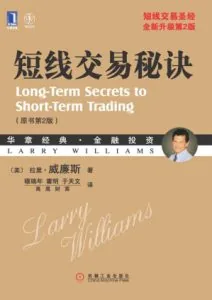
基本信息与出版版本
| 书名 | 短线交易秘诀 |
|---|---|
| 作者 | 拉里·威廉斯 |
| 类别 | 金融 / 期货交易 / 技术分析 |
| 出版社 | 机械工业出版社 |
| ISBN | 9787111405624 |
| 电子书格式 | PDF / ePub / mobi / azw3 |
不同版本的出版社、译者、封面和排版可能存在差异;页数如果来源不足,本页不强行补写。实际电子书版本请以下载后的文件内容为准。
这本书主要讲什么
《短线交易秘诀》(Long-Term Secrets to Short-Term Trading)虽然书名里有“短线”,但拉里·威廉斯并不是教你做那种几分钟进出的高频剥头皮(Scalping),而是教你做波段交易(Swing Trad
中文书评
《短线交易秘诀》是一部更接近交易实战手册的金融作品,它讨论的并不是如何靠几次快速买卖获得暴利,而是如何在复杂、不确定的市场环境中寻找更高概率的交易机会。拉里·威廉斯以多年期货市场交易经验为基础,将短线交易重新定义为一种基于市场节奏、价格行为、周期规律和风险控制的波段操作方法。书名容易让人误以为这是一本教人追逐分钟级行情的技巧书,但阅读之后会发现,它真正关注的是交易者如何理解市场变化,并建立一套能够长期执行的交易思维。
Wiley 作品的背景来自作者长期参与商品期货和金融市场交易的经历。拉里·威廉斯并不是单纯从理论角度分析价格走势,而是将自己的交易观察、指标研究和实战经验结合起来。他提出的威廉指标 Williams %R 也是其交易体系中的重要组成部分,书中大量内容围绕市场周期、价格波动、突破机会、入场时机以及退出策略展开。相比许多只强调预测行情方向的交易书,本书更重视交易者如何面对错误判断,以及如何通过资金管理减少损失。
Wiley 本书的核心主题,是寻找短期市场波动背后的规律。拉里·威廉斯认为,市场并非完全随机,价格变化中存在重复出现的节奏,例如周期性波动、趋势转换和极端行情后的修正机会。书中讨论了市场如何移动、什么时候应该持有盈利仓位、什么时候必须退出交易等问题。对于交易者来说,最有价值的部分并不是某一个具体指标,而是作者反复强调的交易纪律:即使拥有判断优势,也必须接受亏损存在,并通过规则限制情绪影响。
作品中的核心人物其实就是作者本人塑造出的交易者形象。拉里·威廉斯不是以成功预测者的姿态出现,而是一个不断面对市场压力的实践者。他描述的冲突不是传统故事中的人物矛盾,而是交易者与市场之间的长期博弈。例如,交易者面对连续盈利后产生的过度自信,面对亏损仓位时不愿止损,面对突发行情时无法保持冷静,这些问题贯穿全书。作者通过自己的经验说明,交易能力不仅来自技术分析,也来自心理控制和执行能力。
本书最大的优点,是它没有把交易包装成简单的致富公式。拉里·威廉斯承认短线交易具有高风险,也强调交易者必须理解自己的能力范围。书中的案例和方法对于希望学习技术分析、期货交易以及波段操作的人具有参考价值,尤其适合已经接触过K线、趋势、指标等基础知识,希望进一步建立交易体系的读者。 不过,这本书也存在一定不足。首先,书中的部分交易方法建立在作者长期经验基础上,对于完全没有市场经验的新手来说,理解难度较高。很多策略需要结合实际行情观察,而不是阅读一次就能够机械应用。其次,技术指标和历史规律并不能保证未来结果,市场环境变化可能削弱某些方法的有效性。如果读者只关注买卖信号,而忽略风险控制,反而容易误解作者真正想表达的内容。
适合阅读本书的人,包括希望系统学习短线交易逻辑的投资者、正在研究技术分析方法的交易者,以及想了解专业交易者如何思考市场的人。对于只希望寻找一个稳赚方法、期待通过简单规则快速获利的人,本书可能并不适合,因为它最终强调的是长期训练、经验积累和风险管理。 总体来看,《短线交易秘诀》是一部强调交易思维而不仅是交易技巧的作品。拉里·威廉斯通过对市场周期、价格行为和交易心理的分析,展示了短线交易背后的复杂性。它不会消除市场的不确定性,也不会提供永远有效的预测工具,但它提供了一套观察市场和管理交易的方法。对于认真理解交易逻辑的读者来说,这本书的价值不在于找到一个固定答案,而在于学会如何在变化的市场中做出更理性的决定。
English Review
Long-Term Secrets to Short-Term Trading by Larry Williams is a practical trading book that challenges a common misunderstanding about short-term trading. Despite its title, the book is not focused on rapid-fire speculation or minute-by-minute market scalping. Instead, Williams presents short-term trading as a structured approach based on market cycles, price behavior, timing, and risk management. The central message of the book is that successful trading is not about predicting every market movement, but about recognizing favorable situations and managing uncertainty with discipline.
Wiley The background of the book comes from Larry Williams’ long career as a trader, market analyst, and developer of technical tools. Williams built his reputation through decades of experience studying futures markets and market patterns. His work includes the development of the Williams %R indicator, which became widely used among technical traders. In this book, he combines personal trading experience with discussions of volatility, cycles, entry points, exits, and methods for controlling risk.
Rather than presenting trading as a purely mathematical activity, Williams describes it as a decision-making process where psychology and discipline play major roles. Wiley The core theme of the book is that markets contain recurring patterns that traders can study, but those patterns never remove uncertainty. Williams examines how prices move, how trends develop, how traders can identify potential turning points, and how they should react when the market moves against them. One of the strongest ideas throughout the book is the importance of knowing when to exit.
Many inexperienced traders focus heavily on finding the perfect entry point, while Williams argues that protecting capital and controlling losses are equally important parts of a successful strategy. The main figure in the book is Larry Williams himself as an experienced trader facing the constant challenge of the financial markets. The conflicts presented are not fictional battles between characters, but the real struggles faced by traders every day. Williams discusses the conflict between confidence and overconfidence, patience and impatience, analysis and emotion.
A trader may correctly identify a market opportunity but still fail because of poor timing, excessive risk, or emotional decisions after a loss. Through his own experiences, Williams shows that trading skill depends not only on technical knowledge but also on the ability to follow rules under pressure. One of the book’s greatest strengths is its realistic attitude toward trading. Williams does not present the market as an easy path to wealth. He repeatedly emphasizes that short-term trading involves risk and requires preparation, experience, and self-control.
The book is especially valuable because it explains why traders often make mistakes, such as holding losing positions too long, taking profits too quickly, or becoming overconfident after a series of successful trades. However, the book also has limitations. Some strategies and examples are closely connected to Williams’ personal experience, which may make them difficult for beginners to apply directly. Readers without a foundation in technical analysis, futures markets, or chart interpretation may find certain sections challenging. In addition, no indicator or historical pattern can guarantee future results.
Market conditions change, and strategies that worked in one environment may not perform the same way later. The book is most useful when its concepts are treated as a framework for thinking rather than as fixed trading formulas. This book is suitable for investors who already have basic market knowledge and want to understand short-term trading methods in greater depth. It is also valuable for traders interested in technical analysis, market psychology, and the practical realities of managing positions.
Beginners who are searching for a simple system that promises consistent profits may find the book disappointing because Williams emphasizes process, discipline, and risk control rather than easy answers. Overall, Long-Term Secrets to Short-Term Trading remains an important work for readers interested in understanding how experienced traders approach uncertain markets. Larry Williams does not offer a magical prediction system. Instead, he provides a detailed look at the decisions, mistakes, and habits that shape trading performance.
The lasting value of the book lies in its focus on disciplined thinking: identifying opportunities, accepting uncertainty, protecting capital, and continuously improving as a trader. It is a serious exploration of the mindset required to participate in financial markets.
我的阅读笔记
从现有资料看,它最值得关注的是:《短线交易秘诀》(Long-Term Secrets to Short-Term Trading)虽然书名里有“短线”,但拉里·威廉斯并不是教你做那种几分钟进出的高频剥头皮(Scalping),而是教你做波段交易(Swing Trad。读《短线交易秘诀》时,可以先抓住作者拉里·威廉斯怎样设置背景、人物目标和主要冲突,再看这些部分如何导向主题。
第二个重点是目录、前言和章节安排。如果它能继续推动人物选择、冲突升级和主题回响,这本书就更适合细读;如果只是信息并列,阅读价值会弱一些。
我觉得最值得看的地方
我觉得最值得看的地方,是它围绕“《短线交易秘诀》(Long-Term Secrets to Short-Term Trading)虽然书名里有“短线”,但拉里·威廉斯并不是教你做那种几分钟进出的高频剥头皮(Scalping),而是教你做波段交易(Swing Trad”展开的部分。这一点能帮助读者进入作品真正的矛盾,而不是只停在题材表面。
如果你关注金融 / 期货交易 / 技术分析,可以读完一章后用一句话写下这一章的观点,再决定是否继续精读。这样读完后留下的不是零散印象,而是对人物、冲突和主题的清楚判断。
与同类书有什么区别
读《短线交易秘诀》之前,先判断它属于金融 / 期货交易 / 技术分析里的哪一种:是入门科普、方法书、教材,还是案例型读物。这个判断比只看格式更有用。
第一次读重点看什么
第一次读《短线交易秘诀》,先看它在回答什么问题,再看作者怎么展开。可以先抓这两点:《短线交易秘诀》(Long-Term Secrets to Short-Term Trading)虽然书名里有“短线”,但拉里·威廉斯并不是教你做那种几分钟进出的高频剥头皮(Scalping),而是教你做波段交易(Swing Trad;再结合目录判断自己要不要细读。
- 《短线交易秘诀》(Long-Term Secrets to Short-Term Trading)虽然书名里有“短线”,但拉里·威廉斯并不是教你做那种几分钟进出的高频剥头皮(Scalping),而是教你做波段交易(Swing Trad
哪些人适合读,哪些人可能不适合
如果你正在找《短线交易秘诀》电子版,可以先确认 PDF / ePub / mobi / azw3 这些格式是否够用。想判断内容值不值得读,就看它在金融 / 期货交易 / 技术分析里解决的是哪类问题。
如果你需要的是完整纸质版校勘、特定译本差异或严格学术引用,请优先核对出版社、图书馆或 ISBN 书目系统;如果只是先找电子版阅读,则重点看格式、作者和版本字段是否符合自己的需求。
拉里·威廉斯和这本书的关系
拉里·威廉斯和《短线交易秘诀》的关系,不只是“这本书的作者”这么简单。读这本书时,更值得看的是作者怎样处理金融 / 期货交易 / 技术分析方向里的核心问题,以及这些观点为什么会被整理成一本书。
如果你想评估这本书值不值得读,不要只看作者名气。更实用的办法是看作者提出的问题、使用的材料,以及这些内容能不能形成稳定的主题推进。
常见问题
《短线交易秘诀》主要讲什么?
《短线交易秘诀》主要围绕“《短线交易秘诀》(Long-Term Secrets to Short-Term Trading)虽然书名里有“短线”,但拉里·威廉斯并不是教你做那种几分钟进出的高频剥头皮(Scalping),而是教你做波段交易(Swing Trad”展开。这个入口决定了作品的背景、冲突和主题方向。
《短线交易秘诀》适合什么人读?
它适合愿意围绕《短线交易秘诀》的主题、人物关系和结构推进慢慢读下去的读者。如果只想要非常轻快、直接、低门槛的阅读体验,可能不一定合适。
读《短线交易秘诀》最该关注哪一点?
读《短线交易秘诀》时,建议先看它提出了什么问题,再看作者拉里·威廉斯如何展开。真正决定阅读价值的,是人物选择、冲突发展和主题回响是否能互相支撑。
《短线交易秘诀》电子书有哪些格式?
当前记录的格式为 PDF / ePub / mobi / azw3。实际可用文件、排版和版本信息,以页面底部资源模块和下载后的文件为准。
电子书格式与获取说明
当前页面记录《短线交易秘诀》的电子书格式为 PDF / ePub / mobi / azw3。不同来源的电子书在排版、封面、译名和文件质量上可能会有差异,下载后请以实际文件信息为准。
